
GREEN HOUSE FEEDING - HYBRIDS
 Recalculation in progress …
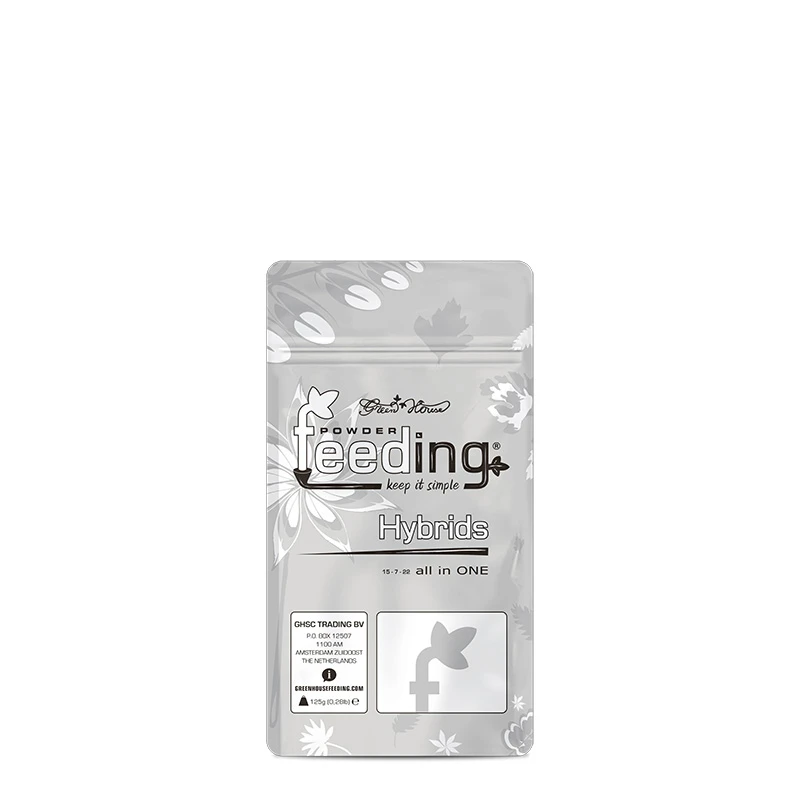
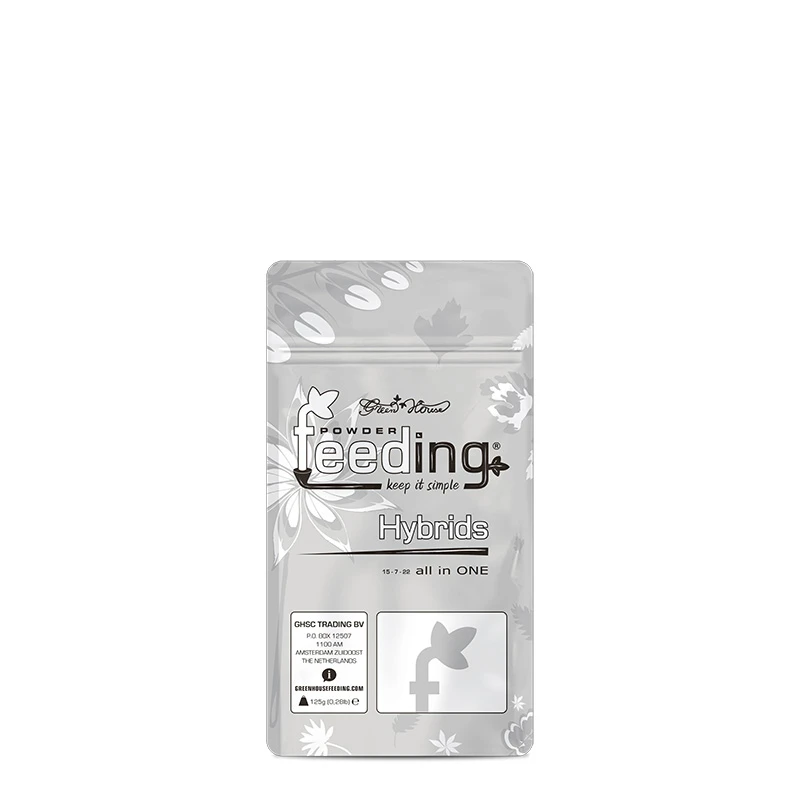
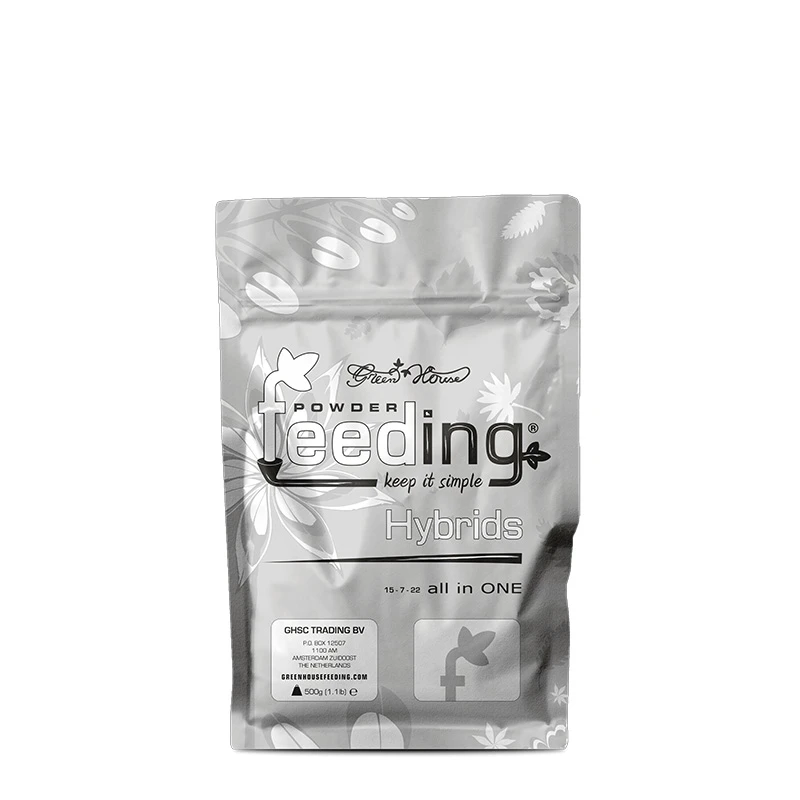
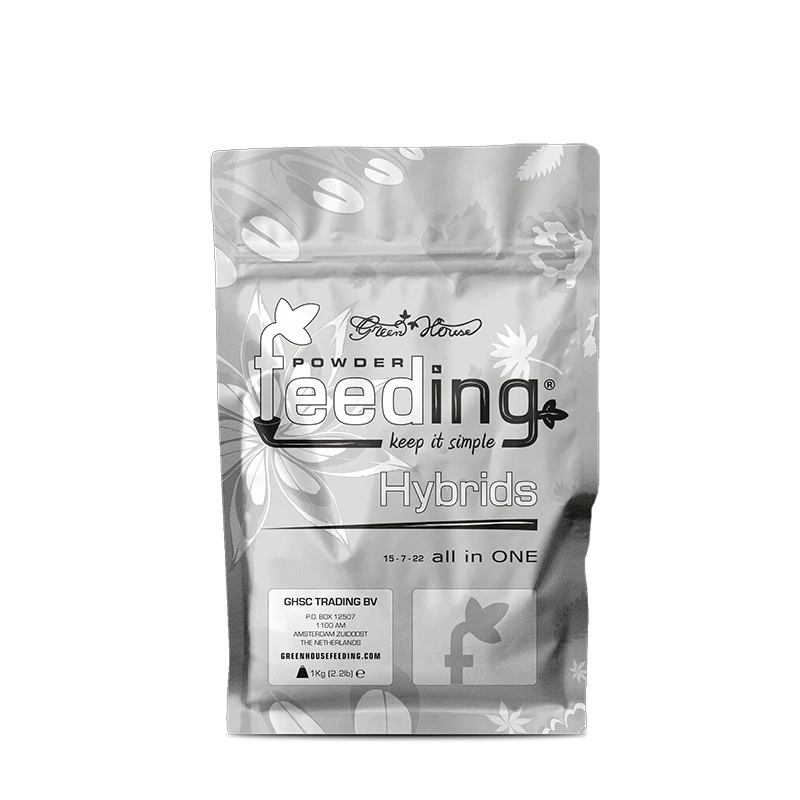
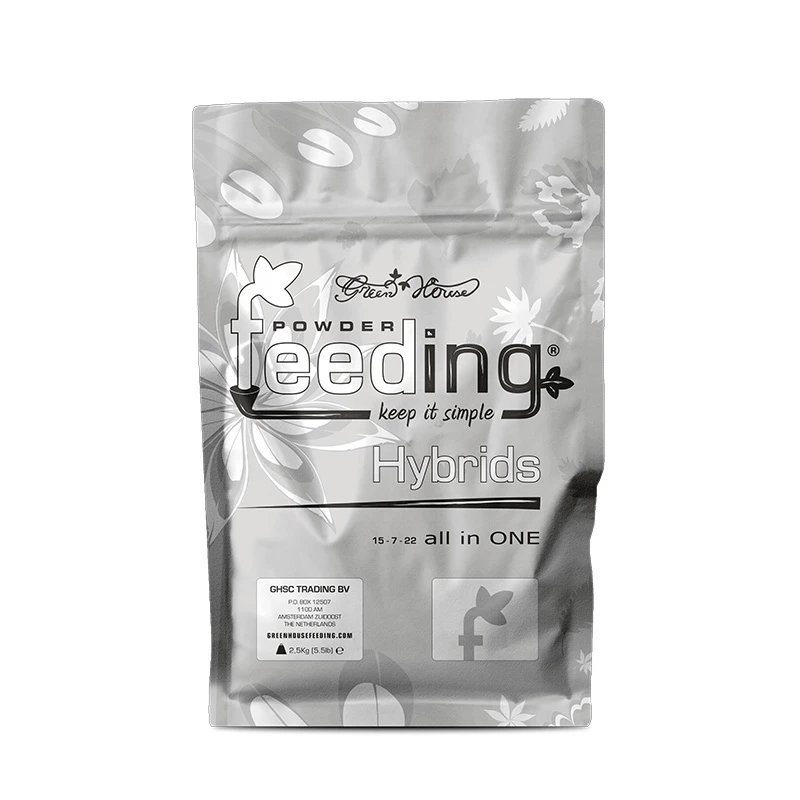
 Hybrid feeding contains less ammonia nitrogen and higher amounts of magnesium, which is advantageous for hybrid varieties with a flowering time of 8-10 weeks and plants grown in hydroponic systems. The higher amount of magnesium and sulphate stimulates the production of essential oils, terpenes and flavonoids.
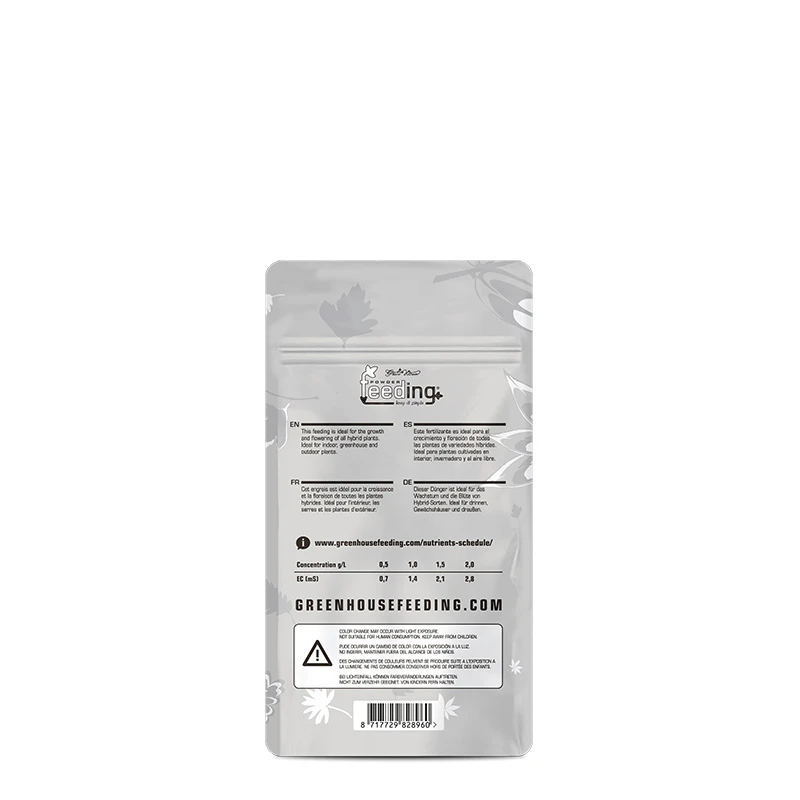
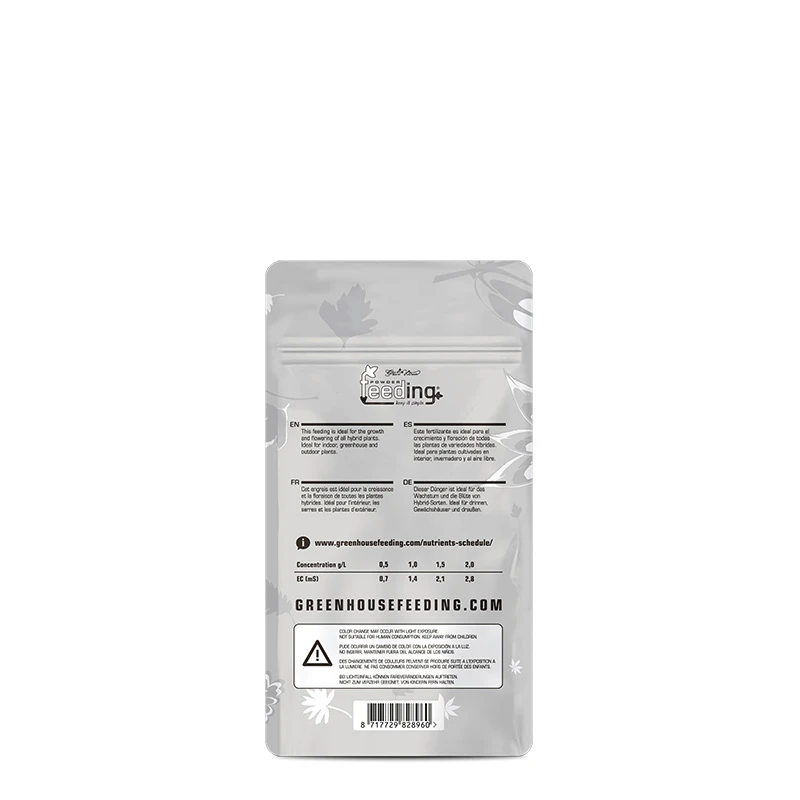
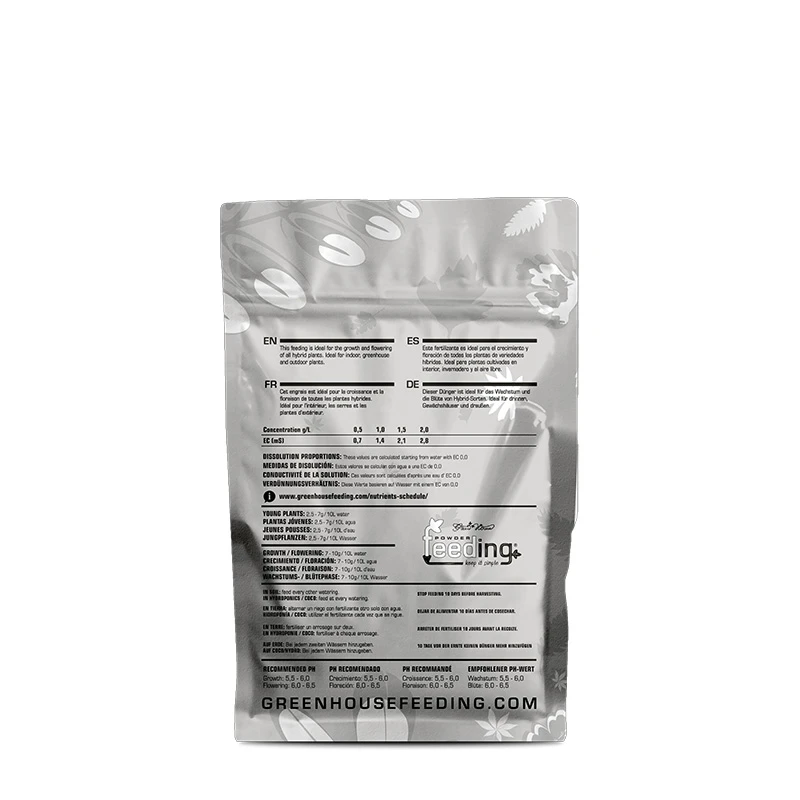
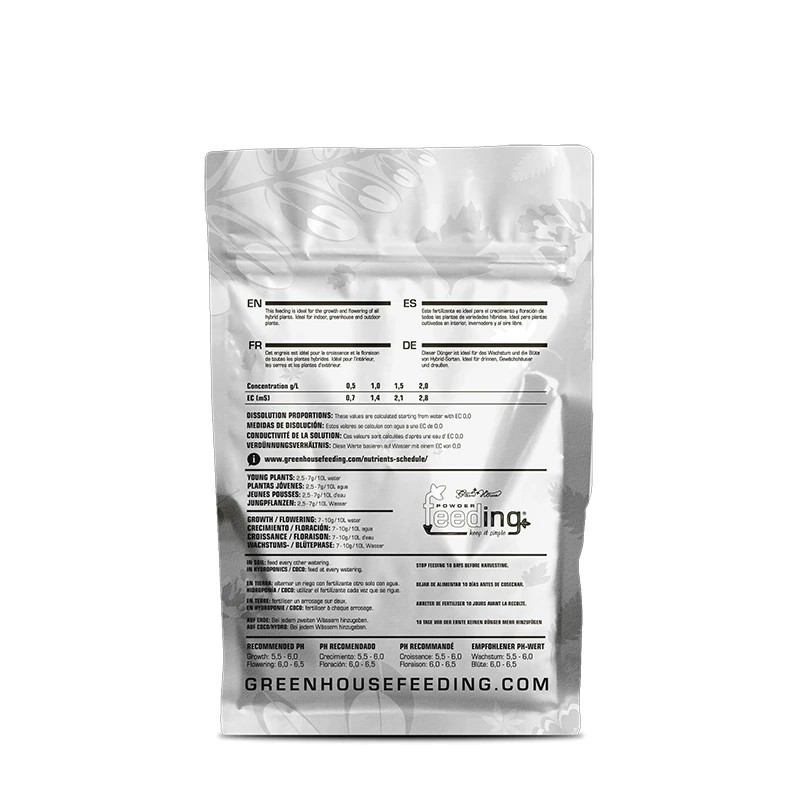
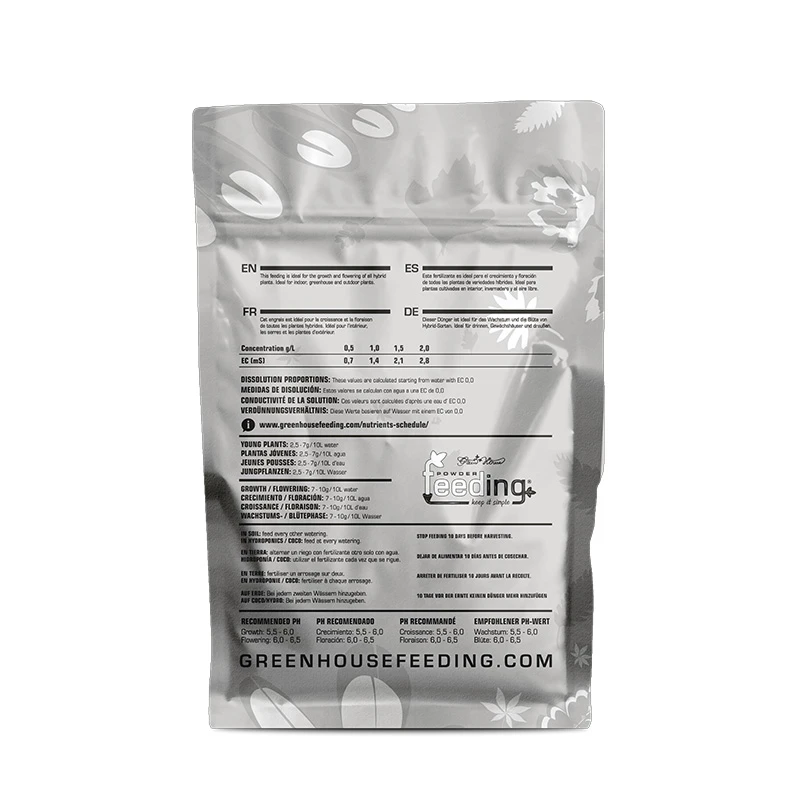
Maximum solubility: 160g/L waterRecommended amount per stock solution: 30g/L water
NPK: 15-7-22
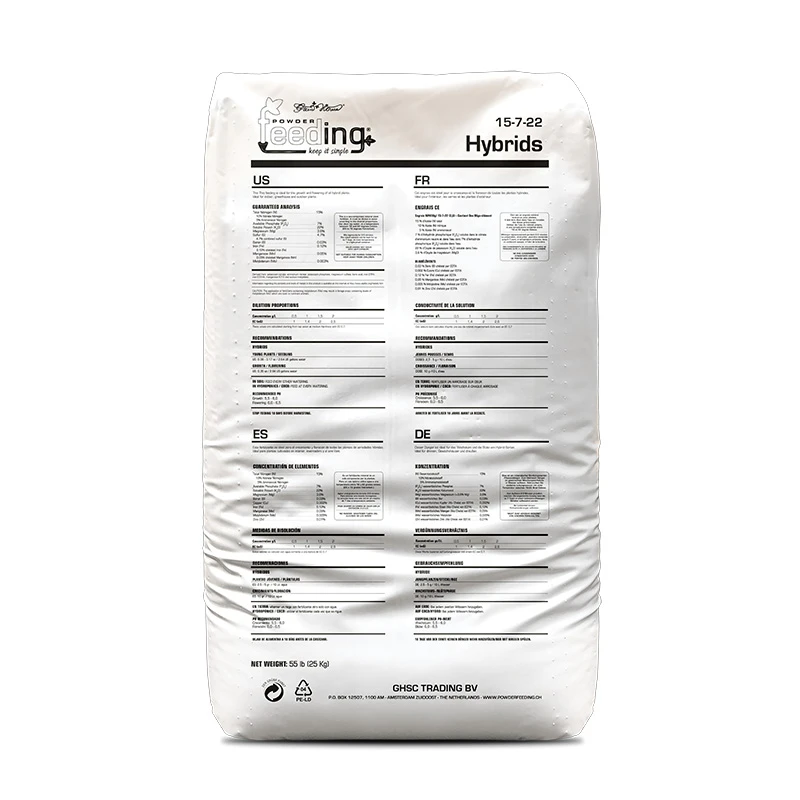
Composition Hybrids Green House Feeding:
- Total nitrogen [N] 15%
10% nitrate nitrogen
5% ammoniacal nitrogen - Soluble phosphoric anhydride [P 2 O 5 ] 7%.
- Soluble potassium oxide [K 2 O] 22
- Soluble magnesium oxide [Mg] 6.0%
- Soluble boron [B] 0.03%
- Soluble copper (as chelated by EDTA) [Cu] 0.03
- Soluble iron (as chelated by EDTA) [Fe] 0.12
- Soluble manganese (as chelated by EDTA) [Mn] 0.05%
- Soluble molybdenum [Mo] 0.005%
- Soluble Zinc (as chelated by EDTA) [Zn] 0.01%
Similar to N and K, magnesium plays an important role in the production of chlorophyll and photosynthesis. It also helps in the activation of enzymes and promotes protein synthesis. Lack of magnesium causes stunted growth, which is visible as yellowing between the veins of the leaves. Magnesium uptake can also be blocked by the excess of other elements such as calcium, potassium or sodium.
Hybrid feeding contains less ammonia nitrogen and higher amounts of magnesium, which is advantageous for hybrid varieties with a flowering time of 8-10 weeks and plants grown in hydroponic systems. The higher amount of magnesium and sulphate stimulates the production of essential oils, terpenes and flavonoids.
Maximum solubility: 160g/L waterRecommended amount per stock solution: 30g/L water
NPK: 15-7-22
Composition Hybrids Green House Feeding:
- Total nitrogen [N] 15%
10% nitrate nitrogen
5% ammoniacal nitrogen - Soluble phosphoric anhydride [P 2 O 5 ] 7%.
- Soluble potassium oxide [K 2 O] 22
- Soluble magnesium oxide [Mg] 6.0%
- Soluble boron [B] 0.03%
- Soluble copper (as chelated by EDTA) [Cu] 0.03
- Soluble iron (as chelated by EDTA) [Fe] 0.12
- Soluble manganese (as chelated by EDTA) [Mn] 0.05%
- Soluble molybdenum [Mo] 0.005%
- Soluble Zinc (as chelated by EDTA) [Zn] 0.01%
Similar to N and K, magnesium plays an important role in the production of chlorophyll and photosynthesis. It also helps in the activation of enzymes and promotes protein synthesis. Lack of magnesium causes stunted growth, which is visible as yellowing between the veins of the leaves. Magnesium uptake can also be blocked by the excess of other elements such as calcium, potassium or sodium.
Hybrid feeding contains less ammonia nitrogen and higher amounts of magnesium, which is advantageous for hybrid varieties with a flowering time of 8-10 weeks and plants grown in hydroponic systems. The higher amount of magnesium and sulphate stimulates the production of essential oils, terpenes and flavonoids.
Maximum solubility: 160g/L waterRecommended amount per stock solution: 30g/L water
NPK: 15-7-22
Composition Hybrids Green House Feeding:
- Total nitrogen [N] 15%
10% nitrate nitrogen
5% ammoniacal nitrogen - Soluble phosphoric anhydride [P 2 O 5 ] 7%.
- Soluble potassium oxide [K 2 O] 22
- Soluble magnesium oxide [Mg] 6.0%
- Soluble boron [B] 0.03%
- Soluble copper (as chelated by EDTA) [Cu] 0.03
- Soluble iron (as chelated by EDTA) [Fe] 0.12
- Soluble manganese (as chelated by EDTA) [Mn] 0.05%
- Soluble molybdenum [Mo] 0.005%
- Soluble Zinc (as chelated by EDTA) [Zn] 0.01%
Similar to N and K, magnesium plays an important role in the production of chlorophyll and photosynthesis. It also helps in the activation of enzymes and promotes protein synthesis. Lack of magnesium causes stunted growth, which is visible as yellowing between the veins of the leaves. Magnesium uptake can also be blocked by the excess of other elements such as calcium, potassium or sodium.
Hybrid feeding contains less ammonia nitrogen and higher amounts of magnesium, which is advantageous for hybrid varieties with a flowering time of 8-10 weeks and plants grown in hydroponic systems. The higher amount of magnesium and sulphate stimulates the production of essential oils, terpenes and flavonoids.
Maximum solubility: 160g/L waterRecommended amount per stock solution: 30g/L water
NPK: 15-7-22
Composition Hybrids Green House Feeding:
- Total nitrogen [N] 15%
10% nitrate nitrogen
5% ammoniacal nitrogen - Soluble phosphoric anhydride [P 2 O 5 ] 7%.
- Soluble potassium oxide [K 2 O] 22
- Soluble magnesium oxide [Mg] 6.0%
- Soluble boron [B] 0.03%
- Soluble copper (as chelated by EDTA) [Cu] 0.03
- Soluble iron (as chelated by EDTA) [Fe] 0.12
- Soluble manganese (as chelated by EDTA) [Mn] 0.05%
- Soluble molybdenum [Mo] 0.005%
- Soluble Zinc (as chelated by EDTA) [Zn] 0.01%
Similar to N and K, magnesium plays an important role in the production of chlorophyll and photosynthesis. It also helps in the activation of enzymes and promotes protein synthesis. Lack of magnesium causes stunted growth, which is visible as yellowing between the veins of the leaves. Magnesium uptake can also be blocked by the excess of other elements such as calcium, potassium or sodium.
Hybrid feeding contains less ammonia nitrogen and higher amounts of magnesium, which is advantageous for hybrid varieties with a flowering time of 8-10 weeks and plants grown in hydroponic systems. The higher amount of magnesium and sulphate stimulates the production of essential oils, terpenes and flavonoids.
Maximum solubility: 160g/L waterRecommended amount per stock solution: 30g/L water
NPK: 15-7-22
Composition Hybrids Green House Feeding:
- Total nitrogen [N] 15%
10% nitrate nitrogen
5% ammoniacal nitrogen - Soluble phosphoric anhydride [P 2 O 5 ] 7%.
- Soluble potassium oxide [K 2 O] 22
- Soluble magnesium oxide [Mg] 6.0%
- Soluble boron [B] 0.03%
- Soluble copper (as chelated by EDTA) [Cu] 0.03
- Soluble iron (as chelated by EDTA) [Fe] 0.12
- Soluble manganese (as chelated by EDTA) [Mn] 0.05%
- Soluble molybdenum [Mo] 0.005%
- Soluble Zinc (as chelated by EDTA) [Zn] 0.01%
Similar to N and K, magnesium plays an important role in the production of chlorophyll and photosynthesis. It also helps in the activation of enzymes and promotes protein synthesis. Lack of magnesium causes stunted growth, which is visible as yellowing between the veins of the leaves. Magnesium uptake can also be blocked by the excess of other elements such as calcium, potassium or sodium.
Hybrid feeding contains less ammonia nitrogen and higher amounts of magnesium, which is advantageous for hybrid varieties with a flowering time of 8-10 weeks and plants grown in hydroponic systems. The higher amount of magnesium and sulphate stimulates the production of essential oils, terpenes and flavonoids.
Maximum solubility: 160g/L waterRecommended amount per stock solution: 30g/L water
NPK: 15-7-22
Composition Hybrids Green House Feeding:
- Total nitrogen [N] 15%
10% nitrate nitrogen
5% ammoniacal nitrogen - Soluble phosphoric anhydride [P 2 O 5 ] 7%.
- Soluble potassium oxide [K 2 O] 22
- Soluble magnesium oxide [Mg] 6.0%
- Soluble boron [B] 0.03%
- Soluble copper (as chelated by EDTA) [Cu] 0.03
- Soluble iron (as chelated by EDTA) [Fe] 0.12
- Soluble manganese (as chelated by EDTA) [Mn] 0.05%
- Soluble molybdenum [Mo] 0.005%
- Soluble Zinc (as chelated by EDTA) [Zn] 0.01%
Similar to N and K, magnesium plays an important role in chlorophyll production and photosynthesis. It also aids in the activation of enzymes and promotes protein synthesis. Lack of magnesium causes stunted growth, which is visible as yellowing between the veins of the leaves. Magnesium uptake can also be blocked by the excess of other elements such as calcium, potassium or sodium.
Format available to order.