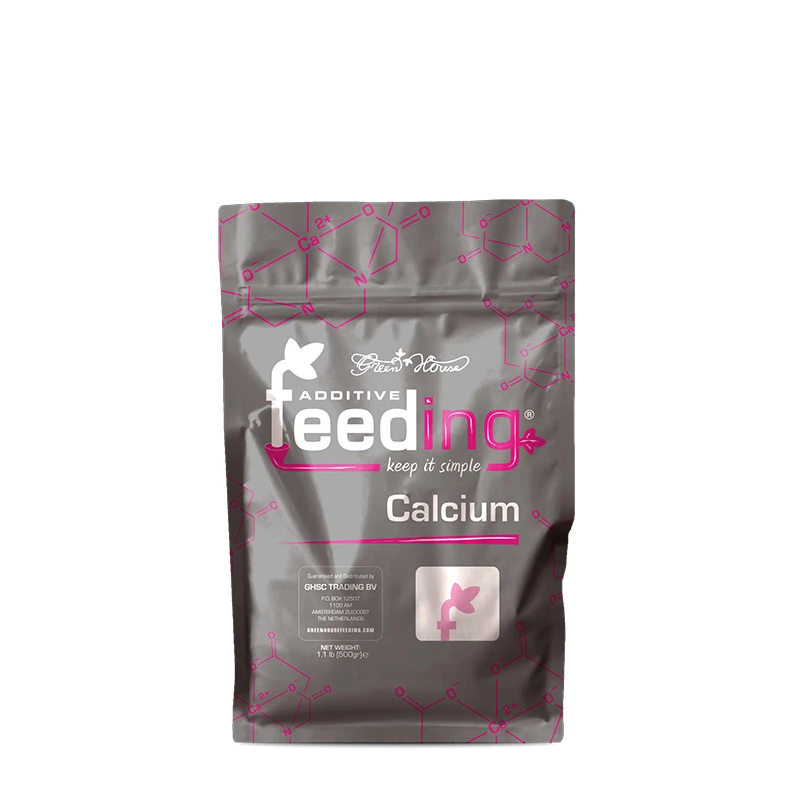

GREEN HOUSE FEEDING - CALCIUM
 Recalculation in progress …
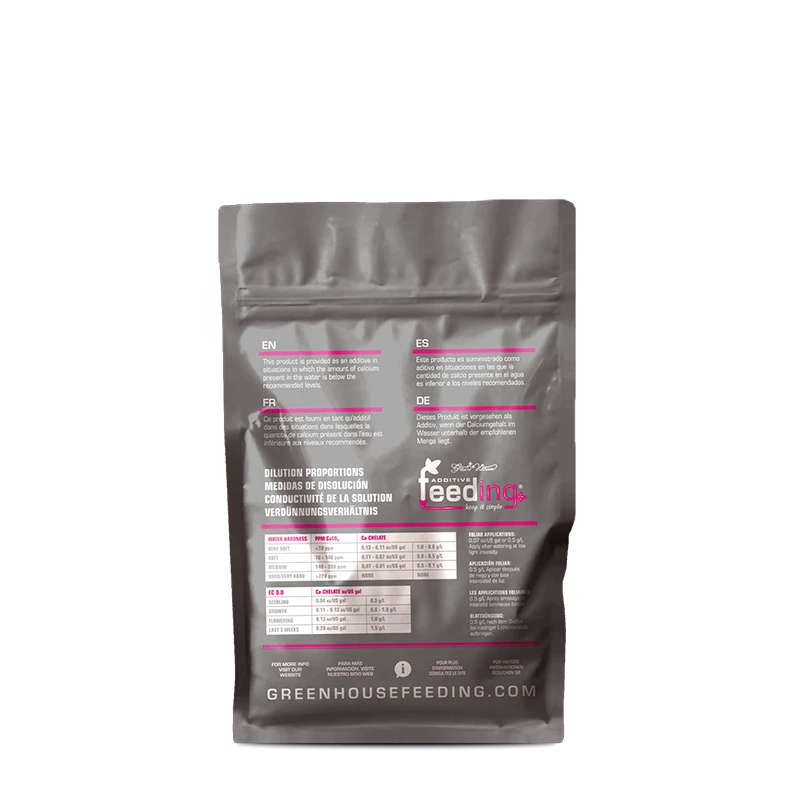
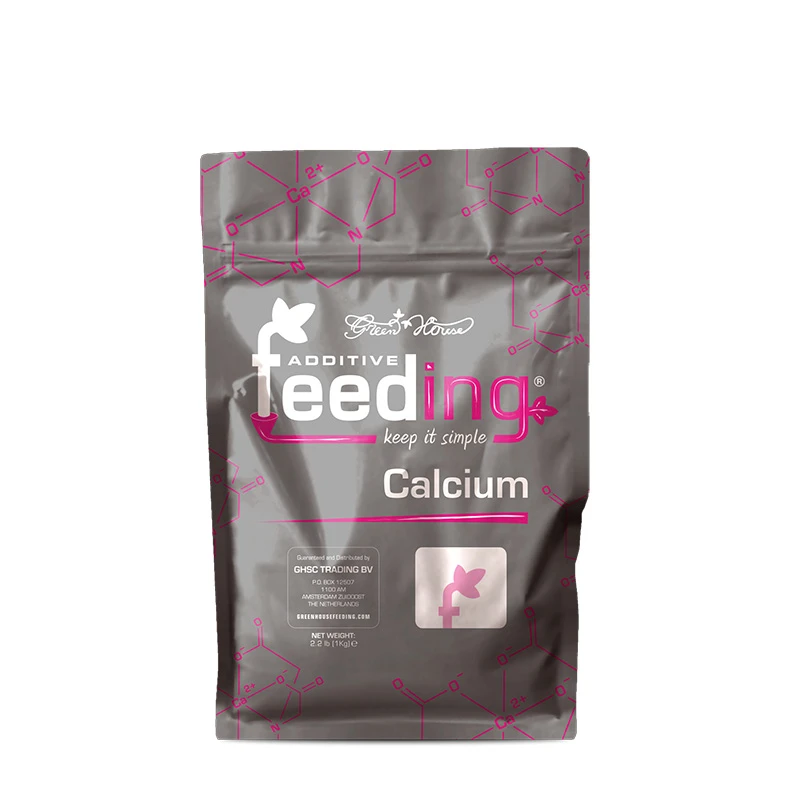
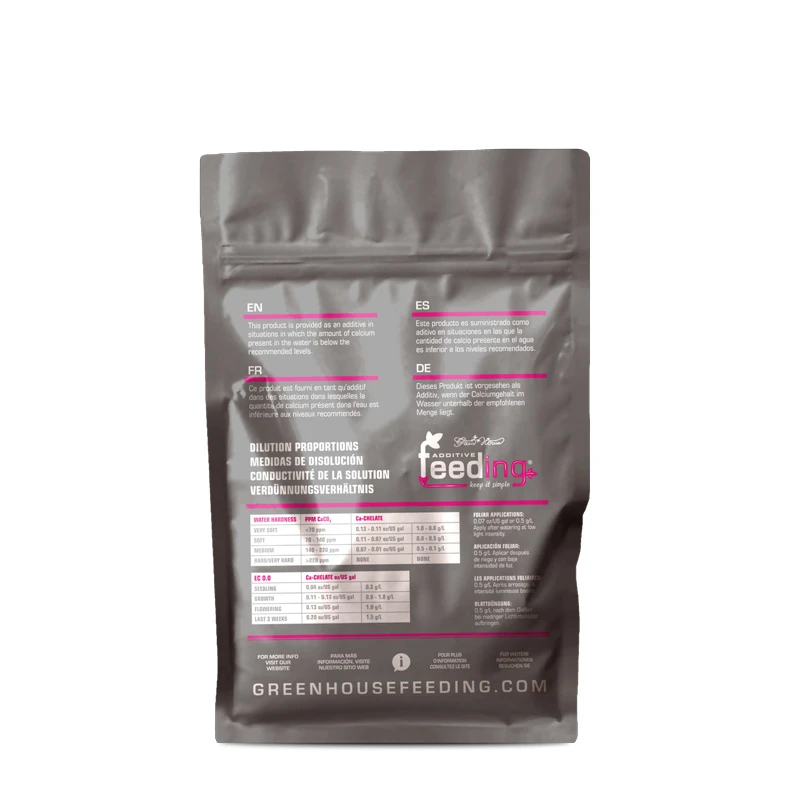
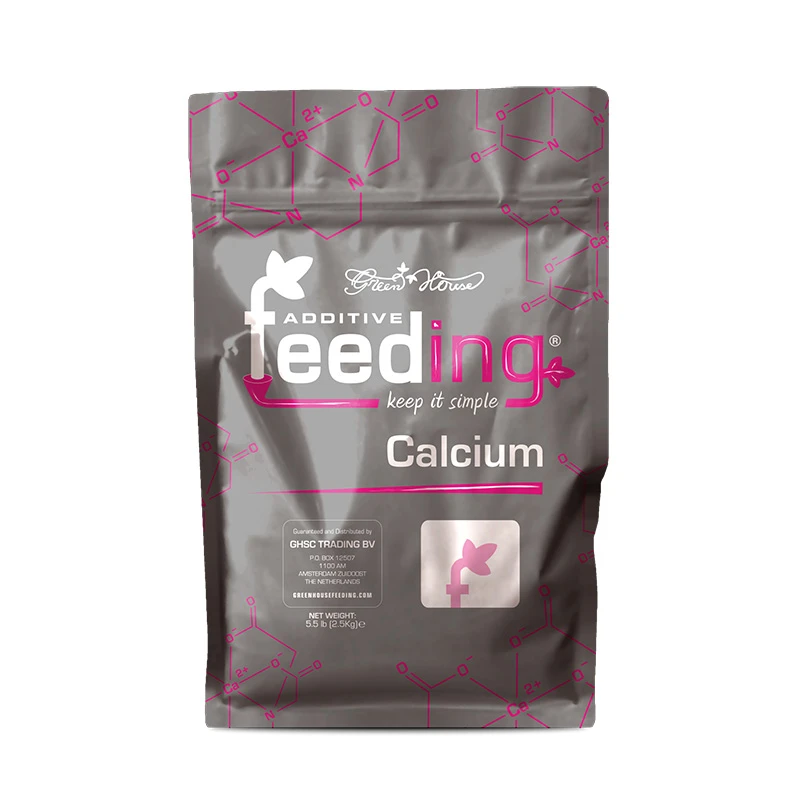
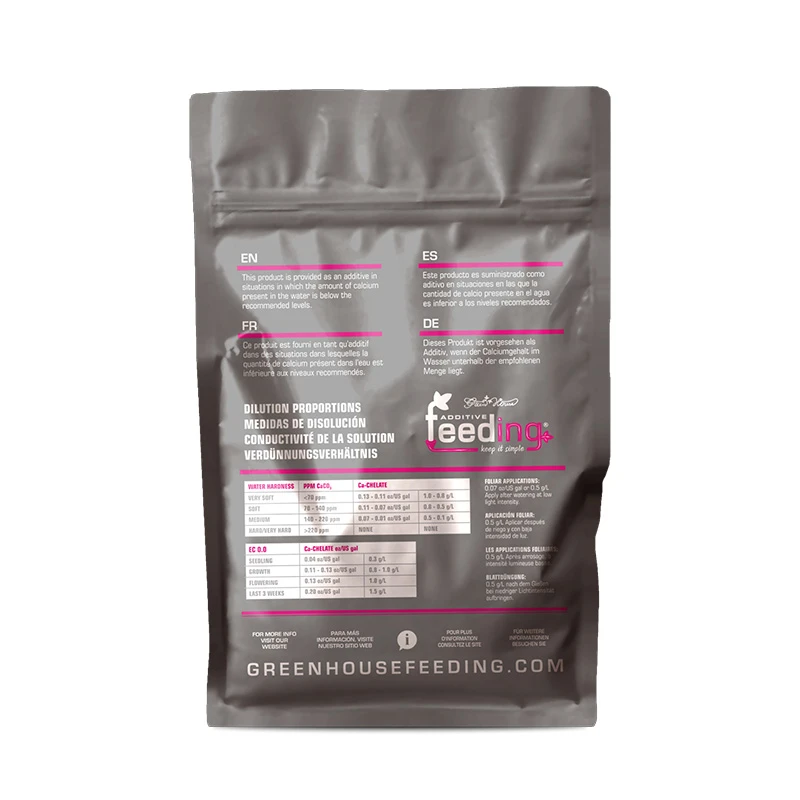
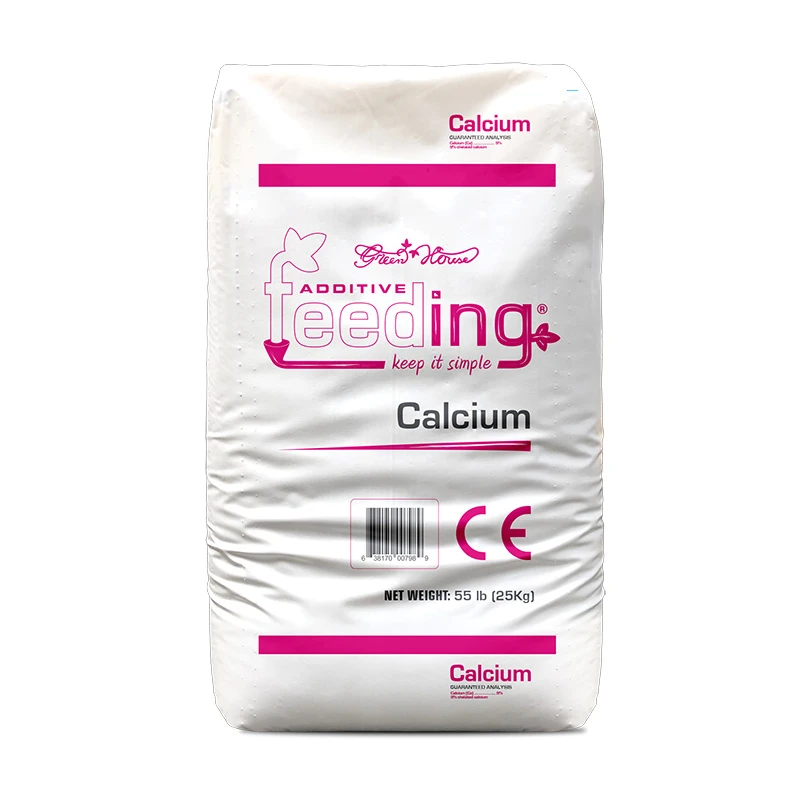
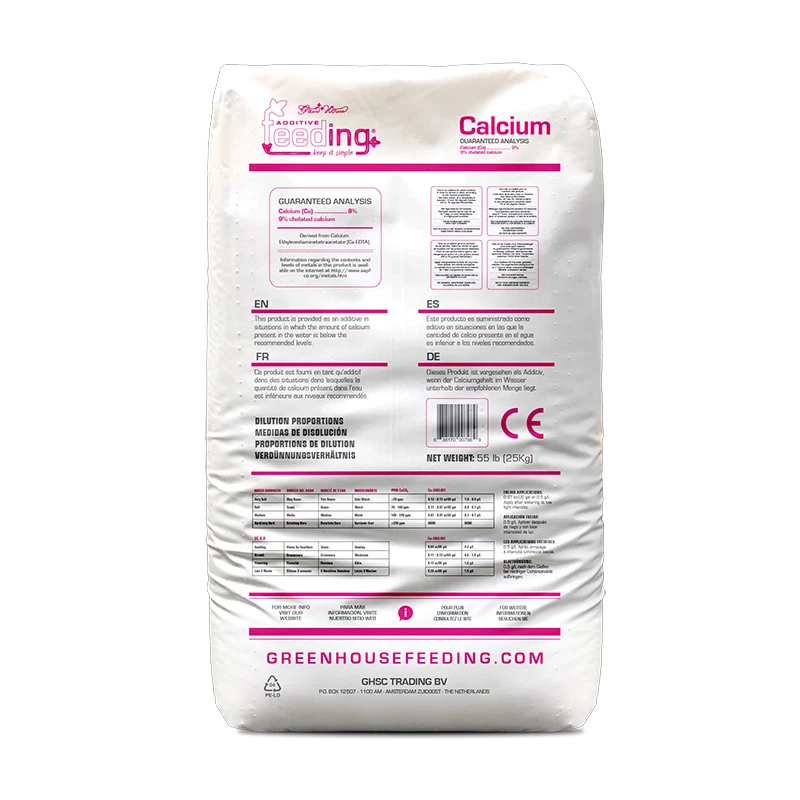
 Calcium from Green House Feeding is an additive that should be used in situations where the amount of calcium in the water is below the recommended values.
The calcium in Green House Feeding is chelated by EDTA - this product is very stable and does not interact with other elements.
Calcium is essential for growing a healthy crop. It strengthens cell walls and plant structure, prevents and corrects deficiencies caused by lack of / or imbalance in calcium assimilation.
Maximum solubility: 300g/L waterRecommended amount per stock solution: 90g/L water
Indications for use of Calcium from Green House Feeding:
- R/O and very soft > Recommended values
- Soft > 50-80% of recommended values
- Moderately hard > 10-50% of recommended values
- Hard water > No calcium required
Most micronutrients (inorganic metals) can be chelated, which allows them to remain available to the plant even if environmental conditions are not ideal. EDTA is the most common and stable form of chelation. Nitrogen is a part of the EDTA molecule, but this nitrogen is not available to the plant.
Calcium from Green House Feeding is an additive that should be used in situations where the amount of calcium in the water is below the recommended values.
The calcium in Green House Feeding is chelated by EDTA - this product is very stable and does not interact with other elements.
Calcium is essential for growing a healthy crop. It strengthens cell walls and plant structure, prevents and corrects deficiencies caused by lack of / or imbalance in calcium assimilation.
Maximum solubility: 300g/L waterRecommended amount per stock solution: 90g/L water
Indications for use of Calcium from Green House Feeding:
- R/O and very soft > Recommended values
- Soft > 50-80% of recommended values
- Moderately hard > 10-50% of recommended values
- Hard water > No calcium required
Most micronutrients (inorganic metals) can be chelated, which allows them to remain available to the plant even if environmental conditions are not ideal. EDTA is the most common and stable form of chelation. Nitrogen is a part of the EDTA molecule, but this nitrogen is not available to the plant.
Calcium from Green House Feeding is an additive that should be used in situations where the amount of calcium in the water is below the recommended values.
The calcium in Green House Feeding is chelated by EDTA - this product is very stable and does not interact with other elements.
Calcium is essential for growing a healthy crop. It strengthens cell walls and plant structure, prevents and corrects deficiencies caused by lack of / or imbalance in calcium assimilation.
Maximum solubility: 300g/L waterRecommended amount per stock solution: 90g/L water
Indications for use of Calcium from Green House Feeding:
- R/O and very soft > Recommended values
- Soft > 50-80% of recommended values
- Moderately hard > 10-50% of recommended values
- Hard water > No calcium required
Most micronutrients (inorganic metals) can be chelated, which allows them to remain available to the plant even if environmental conditions are not ideal. EDTA is the most common and stable form of chelation. Nitrogen is a part of the EDTA molecule, but this nitrogen is not available to the plant.
Calcium from Green House Feeding is an additive that should be used in situations where the amount of calcium in the water is below the recommended values.
The calcium in Green House Feeding is chelated by EDTA - this product is very stable and does not interact with other elements.
Calcium is essential for growing a healthy crop. It strengthens cell walls and plant structure, prevents and corrects deficiencies caused by lack of / or imbalance in calcium assimilation.
Maximum solubility: 300g/L waterRecommended amount per stock solution: 90g/L water
Indications for use of Calcium from Green House Feeding:
- R/O and very soft > Recommended values
- Soft > 50-80% of recommended values
- Moderately hard > 10-50% of recommended values
- Hard water > No calcium required
Most micronutrients (inorganic metals) can be chelated, which allows them to remain available to the plant even if environmental conditions are not ideal. EDTA is the most common and stable form of chelation. Nitrogen is a part of the EDTA molecule, but this nitrogen is not available to the plant.